
2025 Smell Station Round-up!

This year, the AromaPrime team has enjoyed working on varied projects for museums and themed attractions. One of our favourite types of project is the development of a smell station!
Here are a few memorable smell stations we have contributed to in 2025:
Victoria and Albert Museum's Marie Antoinette Style
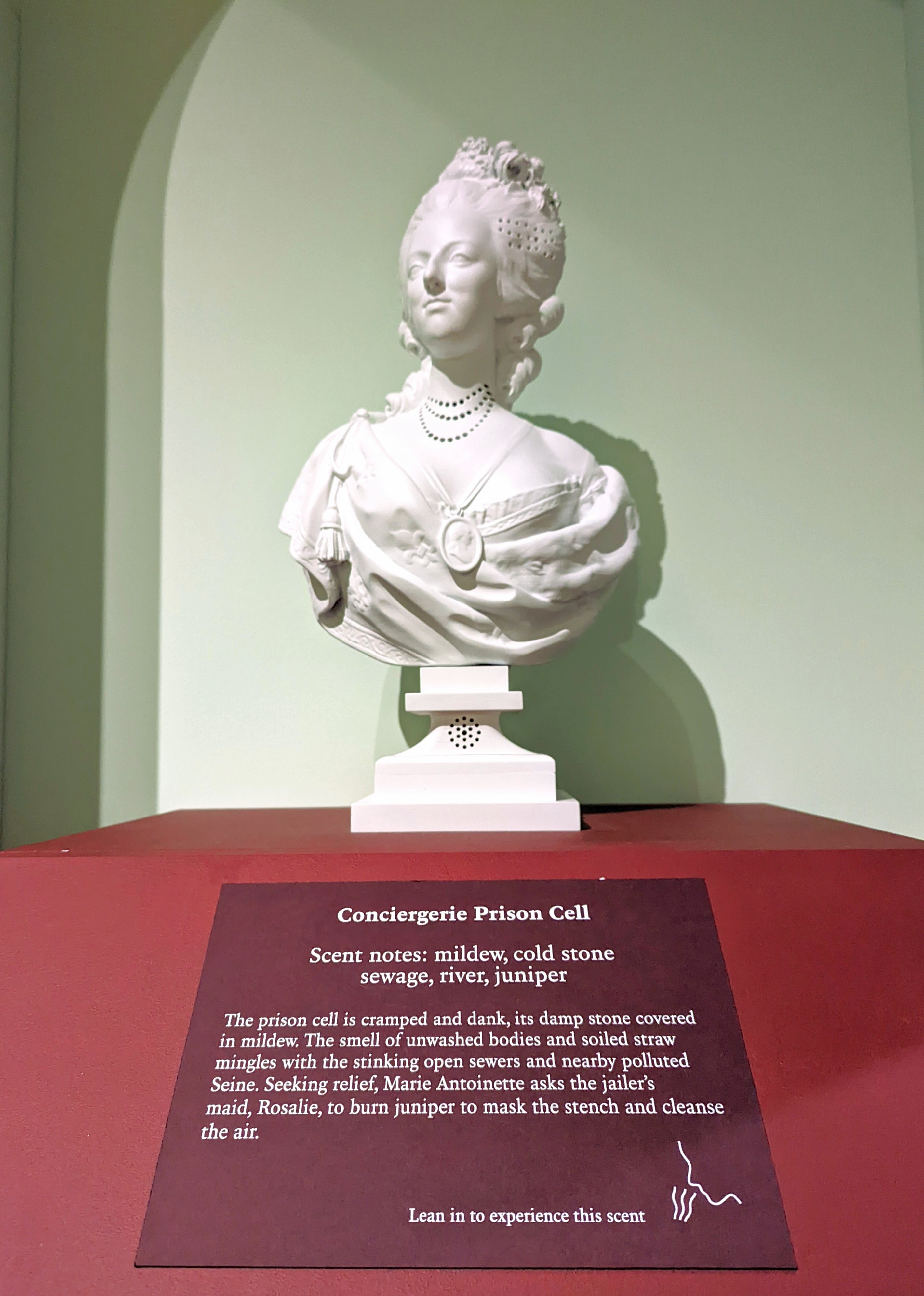
We were approached by museum scent practice AVM Curiosities to collaborate on recreating the odour of Marie Antoinette's prison cell for the exhibition Marie Antoinette Style. This scent was informed by historical records, with Marie Antoinette having requested that juniper be burnt to mask the stench of her cell. The final odour is presented in a bust with sniffable holes that resemble beads on a necklace, as arranged by AVM Curiosities and the Museum.
Science and Industry Museum's Operation Ouch! Brains, Bogies and You
AromaPrime created an historical vinaigrette scent, among others, for this children's exhibition.
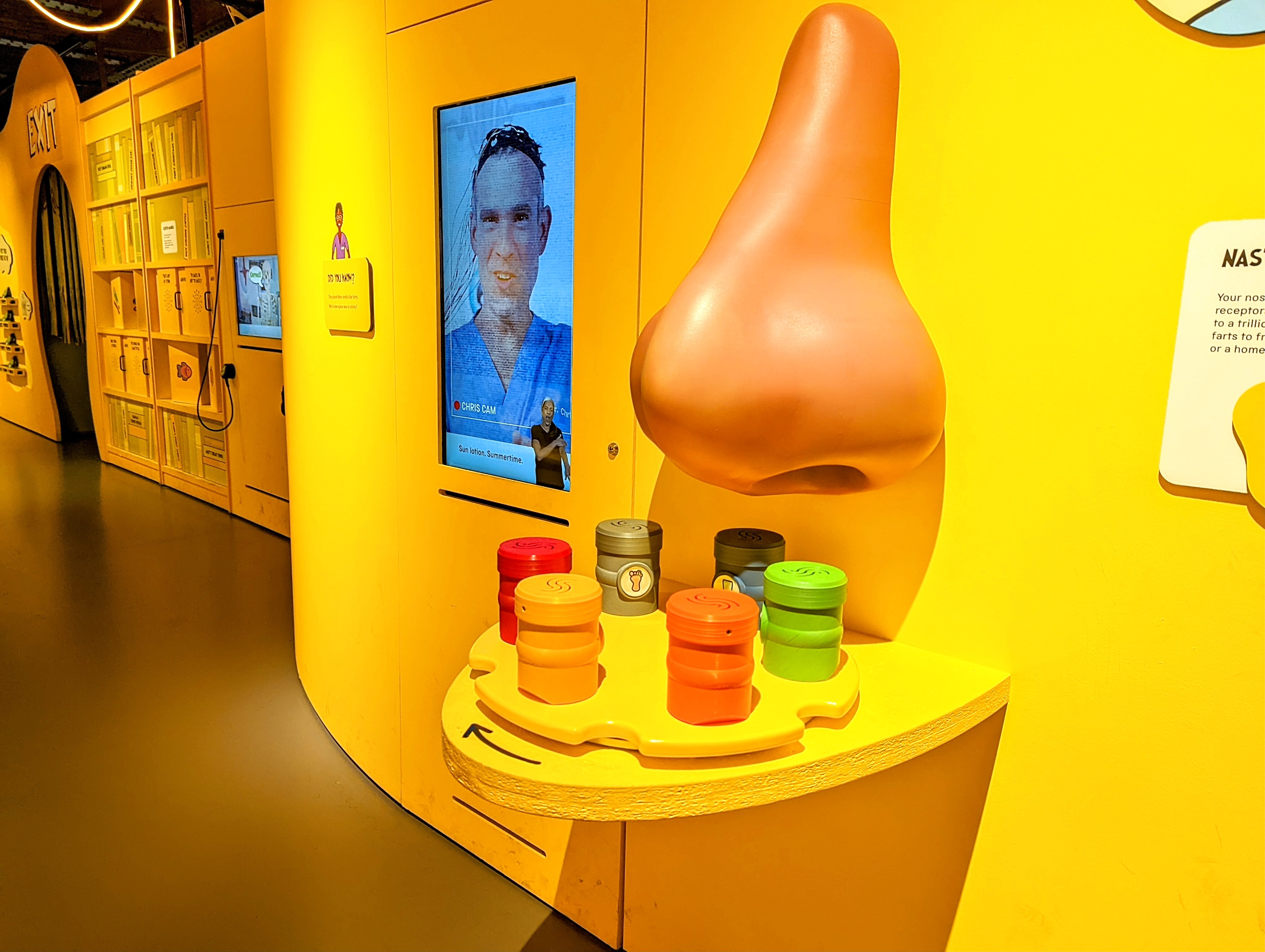
Three smell stations feature, with one including rotating smell pots (containing Aroma Cubes) beneath a giant nose, and a doctor reacting to the scents on a screen. We had never seen a smell station like this before!
Another involves illustrated blocks that visitors can turn to guess what they are sniffing from hatches. The third smell station is simpler, with small holes in the wall for visitors to sniff up-close.
Thackray Museum of Medicine's POO!
The popular POO! exhibition features two multi-scented smell stations, allowing young visitors to explore what would normally be a taboo subject.
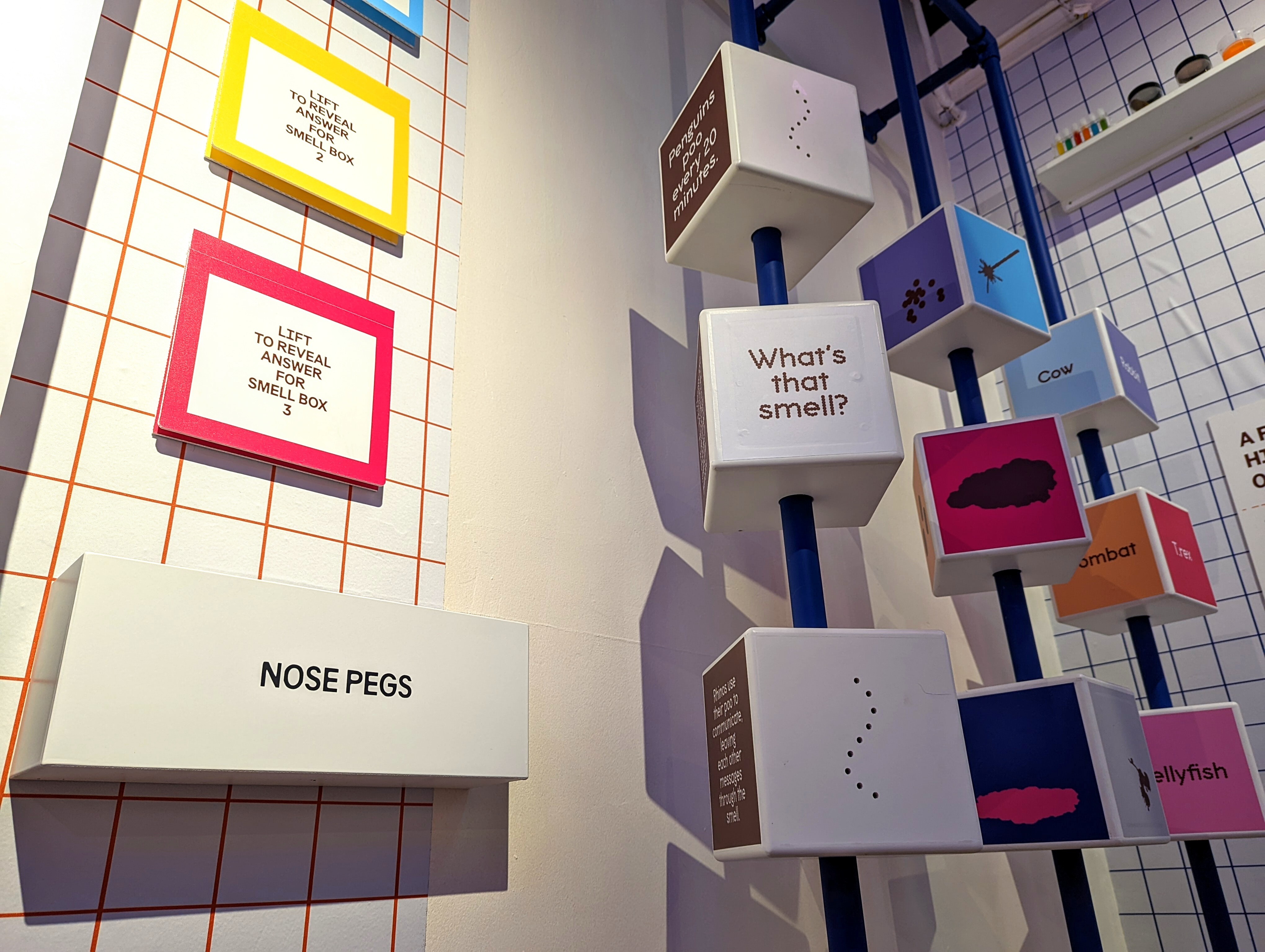
One smell station includes rotating blocks on poles. Some of these blocks subtly emit rhino poo, penguin poo and T-rex poo scents, which were researched in collaboration with the Museum. Visitors can rotate the blocks, which have text and images on them, to guess what they are smelling and to discover facts.
The second smell station features two smell boxes for sniffing. One box emits a human poo scent, while the other emits the fragrance of 1937 coronation anointing oil. This contrast between scents helps communicate the fact that skatole is a component of poo but also the fanciest of perfumes.
Amusingly, the exhibition provides nose pegs!
Suntago water park's Crocodile Island
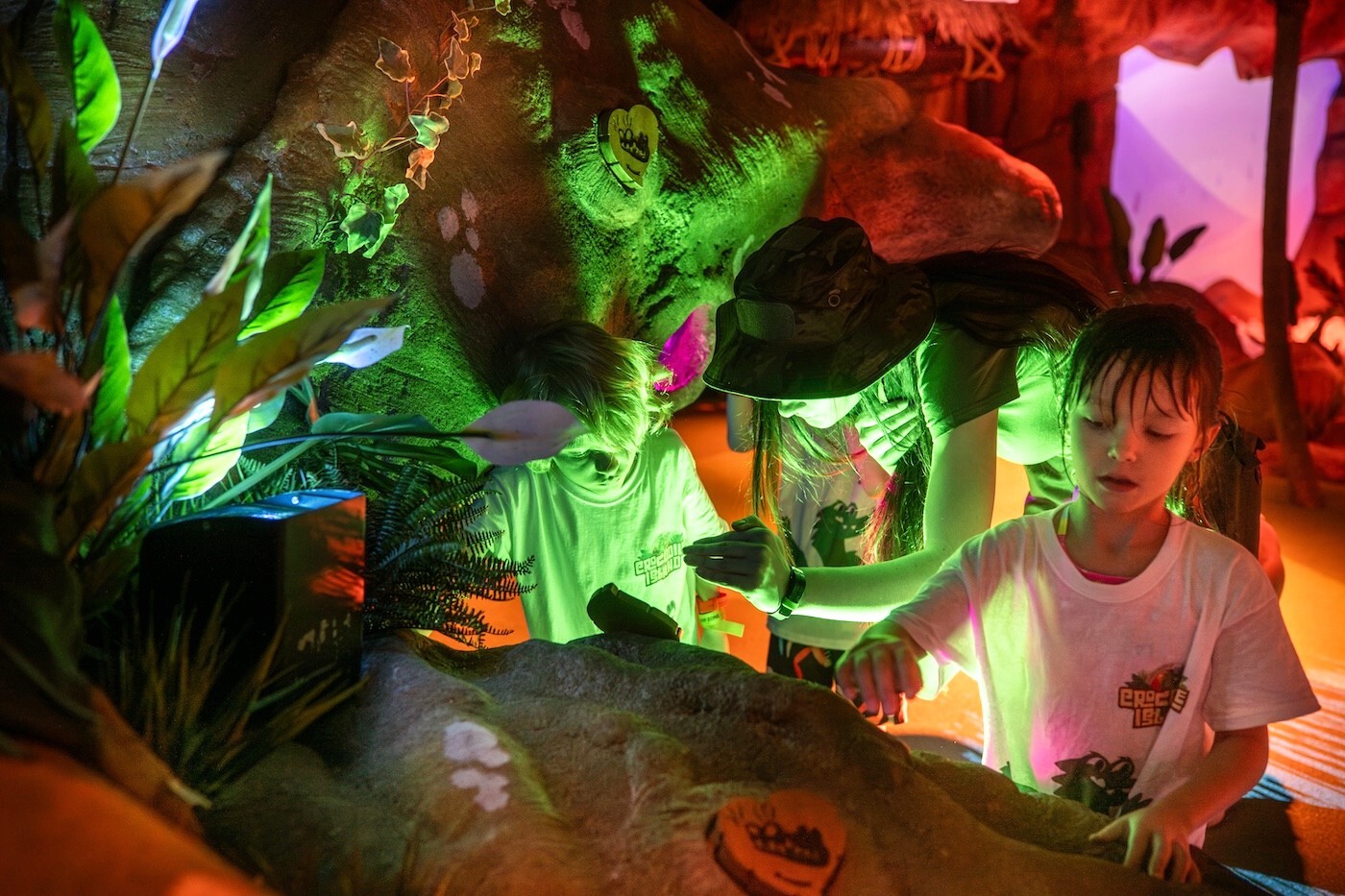
AromaPrime was asked by Creative Studio Berlin to develop two bespoke scents for a 'sensory tree' smell station at a new water park. We provided multiple samples before landing on final coffee flower and durian fruit scents. The scents were provided in Aroma Blocks which were contained within lidded holes in the themed tree structure.
Photo credit: Marcin Kontraktewicz/Suntago
Nothe Fort's Victorian Gun Deck
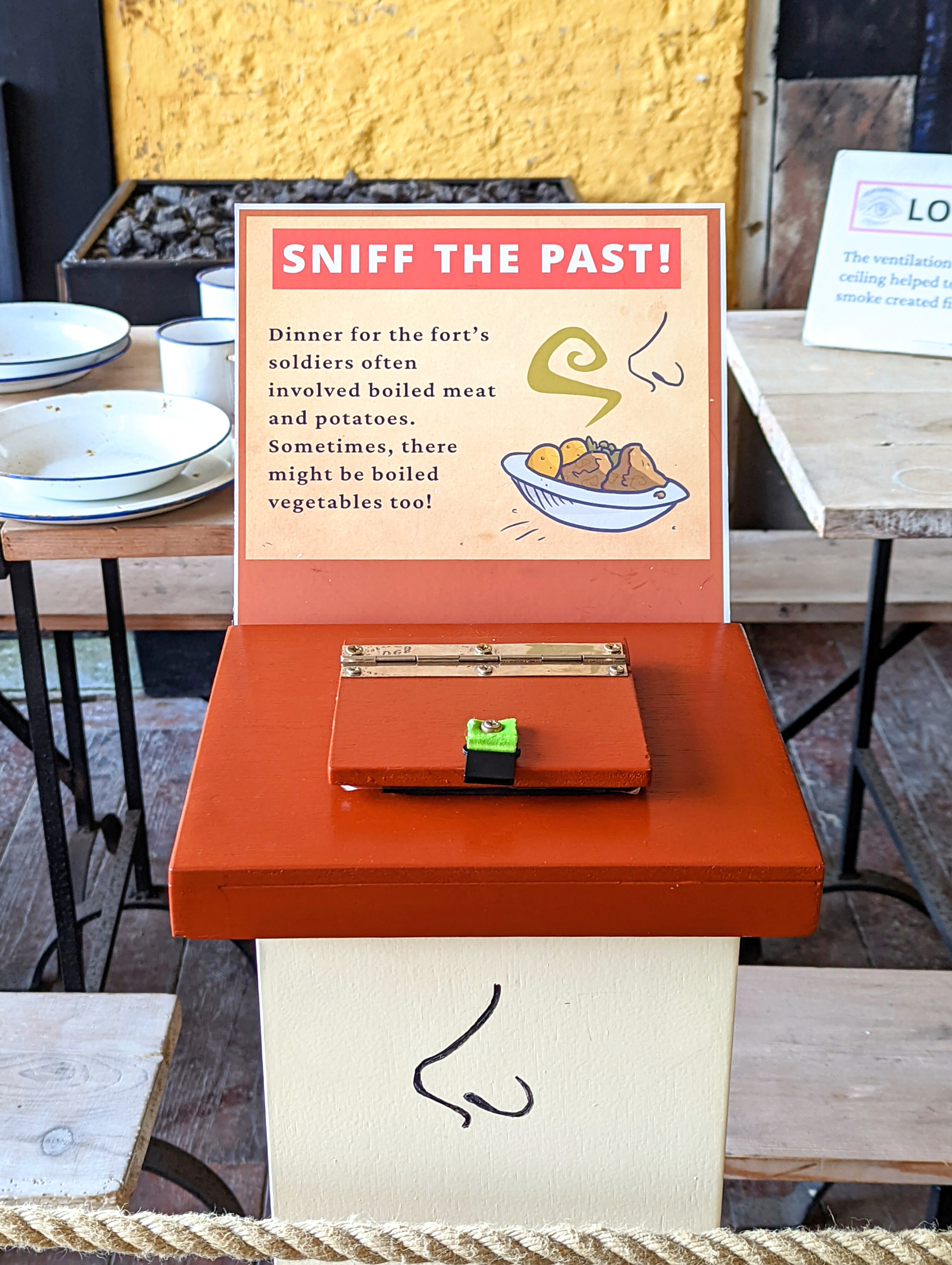
Using research provided by Nothe Fort's historians, AromaPrime developed three scents to help visitors understand what conditions were like for Victorian soldiers. The scents included those of meals, musty sleeping areas and gunsmoke. We also advised on the design on the smell stations, which accompanied a new Sensory Map of Nothe Fort.
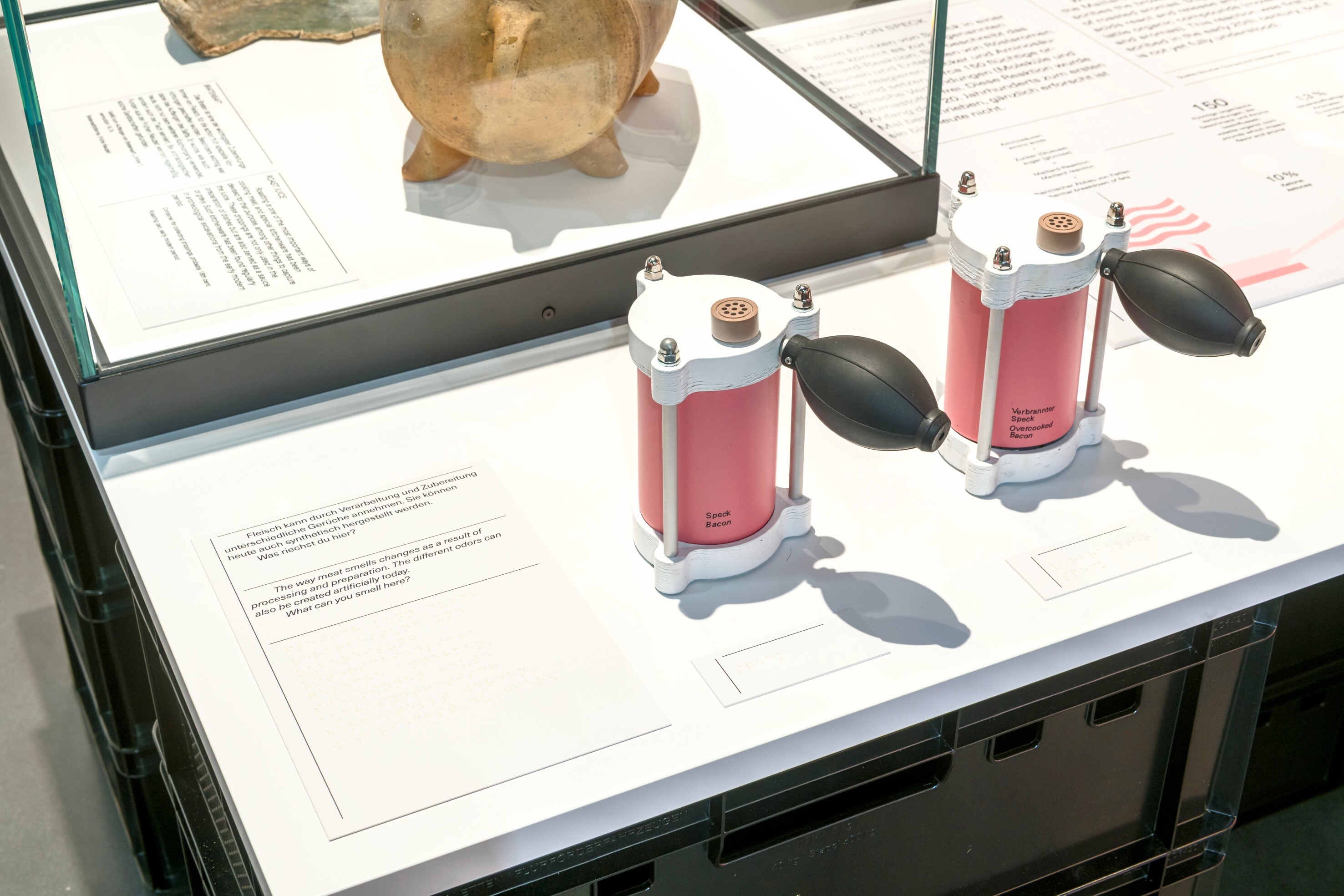
Wien Museum's Fleisch
A new exhibition, exploring the history and ethics of meat, features bespoke scents by AromaPrime, including that of overcooked bacon. Scented material is held within containers, and squeeze bulbs push the scented air out of holes on top. The colour chosen for smell stations can influence how visitors react to the scents; here, bright pink clearly communicates the subject matter and helps visitors perceive the scents as lifelike.
Photo credit: Klaus Pichler/Wien Museum
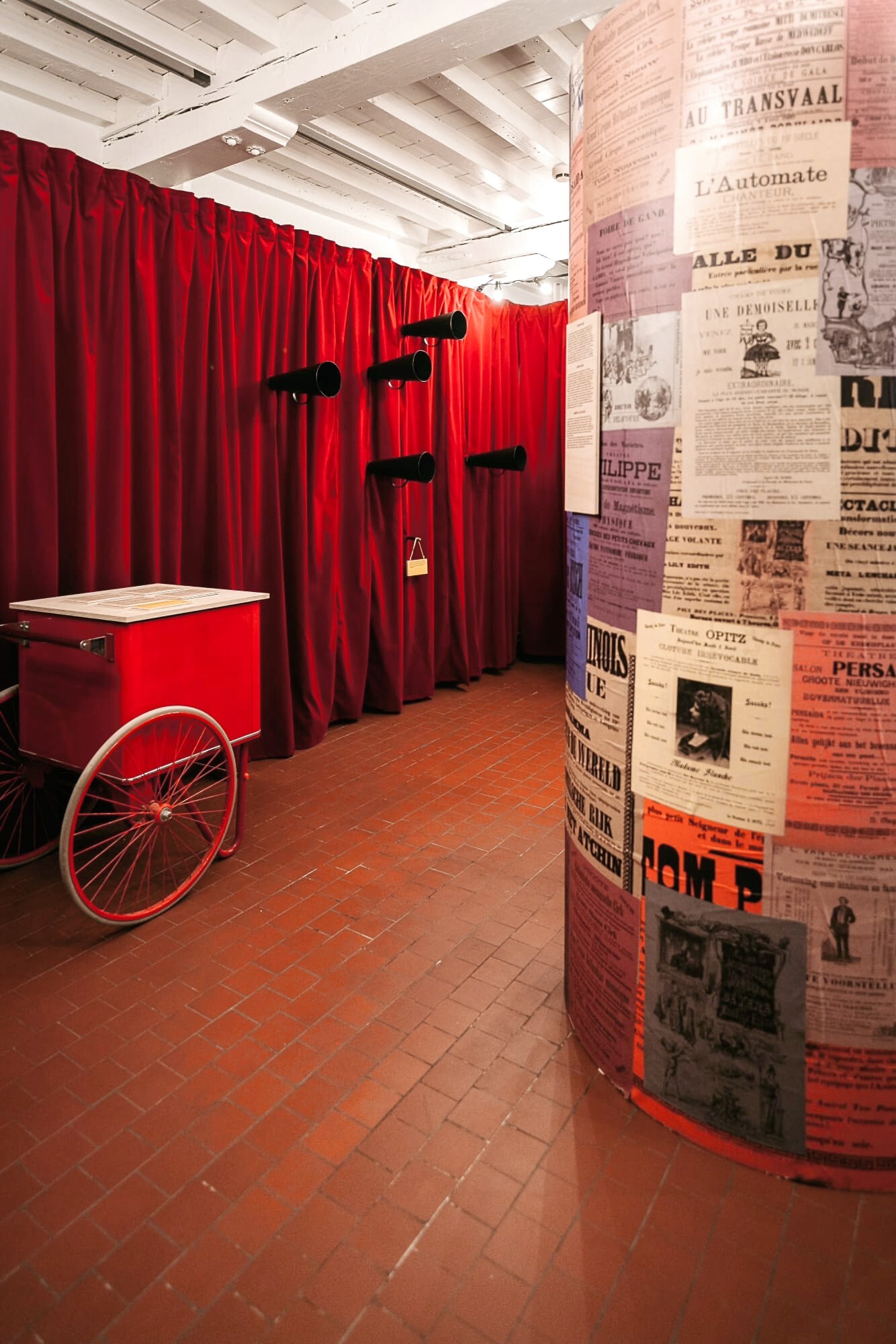
Huis van Alijn's Foorwonder
For this exhibition on the history of fairgrounds, AromaPrime created several bespoke scents, including those of Belgian sugar waffles. The scents of confectionery, burnt wood and manure are accessed in a repurposed popcorn cart, which has lids over hidden Aroma Blocks for sniffing. The exhibition was developed by Tuur Demaegdt and Lars Hemmeryckx.
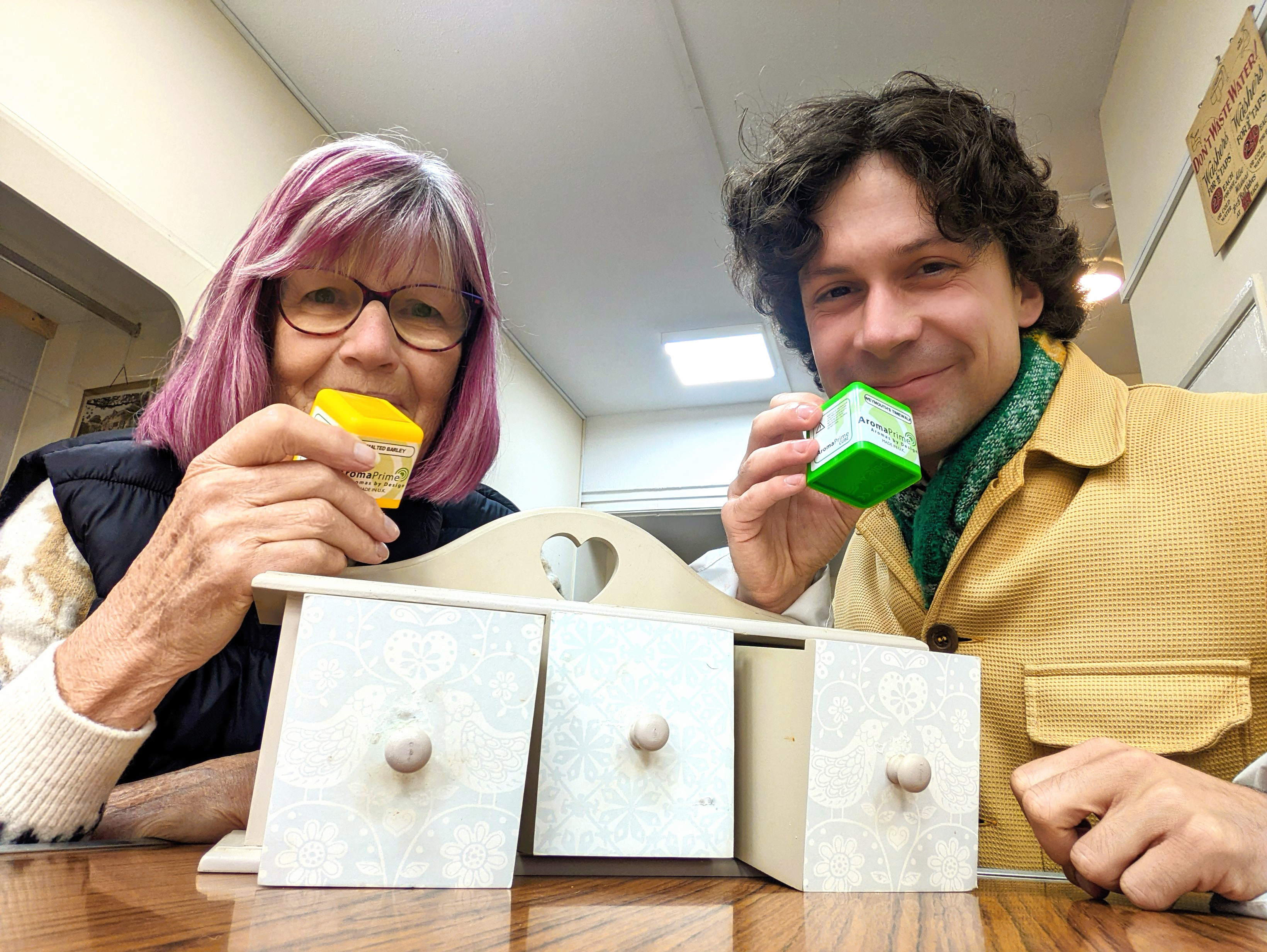
Weymouth Museum's Timewalk smells
Here is an example of how incredibly low-cost a smell station can be when the budget is small. To finish off 2025, AromaPrime worked with Weymouth Museum to reintroduce 'defunct' historical scents that were once a major feature of the town's immersive Timewalk attraction. The Museum simply presents handheld Aroma Cubes inside little drawers on its activity table for visitors to interact with.
Our Attractions and Historical Scenting Consultant, Liam R. Findlay, comments on this year's unique smell stations:
"Smell stations are excellent for attractions, because they are often incredibly simple to make, and they typically pose minimal conservation concern for museums when done right. They are a brilliant means to engage visitors in a direct way that allows for agency. Because smell stations can be so simple, I often expect I have seen it all, but the designs created by attractions this year have shown that there is still plenty of potential for totally new and memorable approaches. It has been a great pleasure to work on these projects, and I look forward to seeing what smell station designs appear in 2026!"